
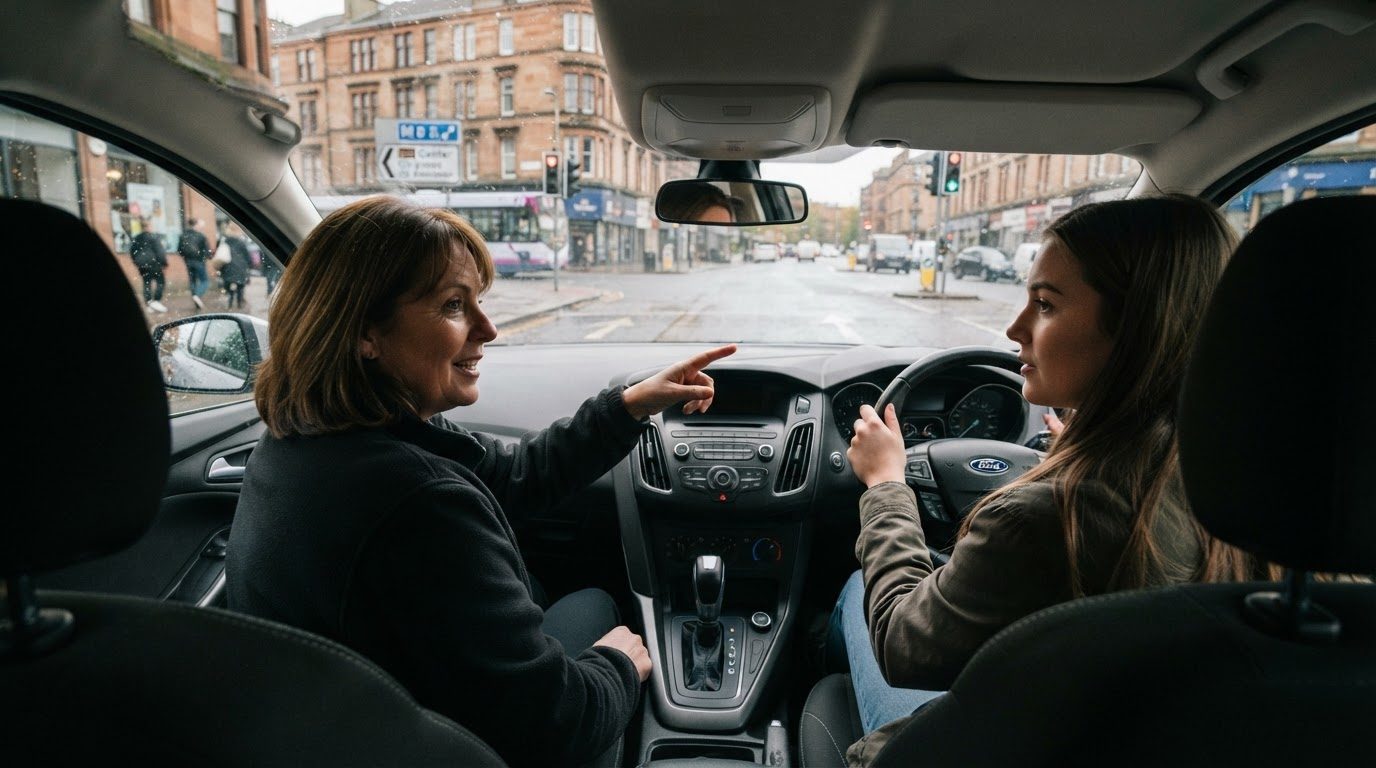
Learning to drive in Glasgow can be demanding: busy urban junctions, multilane roundabouts, steep streets and rapidly changing traffic all require consistent practice. An intensive course can compress that practice into a focused programme, helping suitable learners build competence without the long gaps associated with weekly lessons.
The phrase intensive driving courses glasgow covers several approaches, from a concentrated one-week programme to semi-intensive tuition spread across multiple weeks. The right choice depends less on the advertised duration than on your existing ability, confidence, availability and access to a practical test.
For an impartial starting point, review the course structure and conditions offered by topgeardrivingtuition before making an enquiry. Intensive tuition should be treated as structured driver training, not a guaranteed shortcut to a pass.
Is an Intensive Driving Course Right for Your Situation?
Concentrated tuition can suit learners who:
- Need a licence for employment, relocation or family responsibilities.
- Prefer frequent practice and find that widely spaced lessons allow skills to fade.
- Have limited availability and want to organise learning around a defined period.
- Feel nervous and benefit from repeating the same skill several times in close succession.
It is not, however, a guaranteed “pass in a week” solution. The DVSA practical test assesses independent, safe decision-making across varied roads. A learner who can operate the vehicle but needs substantial work on observation, anticipation or judgement may require considerably more than the advertised course length.
A realistic initial assessment should distinguish between:
- Complete beginners: These learners need vehicle familiarisation, moving off, stopping, steering, gear or selector use, observation routines and basic traffic interaction before test preparation can begin.
- Partly trained learners: Previous experience may shorten the programme, although an instructor must identify and correct ingrained errors rather than assume that lesson hours equal test readiness.
- Refresher candidates: Someone who passed years ago but has not driven recently may need focused work on modern road layouts, confidence and hazard perception.
- Drivers returning after a long break: Assessment should cover both physical vehicle control and decision-making in contemporary Glasgow traffic.
Topgear currently offers these intensive courses in automatic cars only. That can reduce clutch and gear-change workload, but learners should remember that a test in an automatic vehicle normally results in an automatic-only licence entitlement.
Course Formats Available in Glasgow
Topgear’s intensive programmes range from approximately one week to ten weeks. Course length is a guide, not a promise: progress varies according to previous experience, lesson hours, concentration, confidence and the complexity of the skills requiring improvement.
A broad comparison looks like this:
- One-week course: Best suited to a partly trained learner who already controls the car reliably and has a suitable test arrangement.
- Ten-day course: A common intensive format, providing repeated practice while allowing time to develop test-standard consistency.
- Several weeks up to ten weeks: More appropriate for beginners, nervous learners, people returning to driving or anyone balancing training with other commitments.
A semi-intensive timetable may be particularly practical when practical-test dates are scarce. Instead of completing all training immediately and waiting, a learner can spread tuition over several weeks and continue practising towards an existing booking. Lesson frequency can be adapted around work, study, caring responsibilities and travel.
A typical training day may include:
- Vehicle control and cockpit routines.
- Road positioning, lane discipline and speed management.
- T-junctions, crossroads, traffic lights and complex urban junctions.
- Roundabouts, hills and meeting traffic on narrower roads.
- Dual carriageways, merging, overtaking and appropriate following distances.
- Independent driving using road signs or a sat-nav.
- Manoeuvres, emergency-stop procedures and test-style route work.
The instructor should vary roads and traffic conditions rather than repeatedly rehearse one familiar route. Memorising a test area cannot replace the ability to interpret unfamiliar hazards safely.
Planning Around Theory and Practical Test Availability
Passing the theory test is a prerequisite before starting a driving crash course with Topgear. This matters because intensive practical training is most effective when the learner can concentrate on vehicle handling and road decisions rather than simultaneously preparing for the theory exam.
Before committing to dates, check:
- Whether your theory test has been passed and remains valid.
- The available practical-test dates in the relevant Glasgow test area.
- Whether the course will train around an existing booking or include a test at its end.
- Whether the instructor’s automatic vehicle is available for the chosen date.
Training quickly and securing an early test are separate issues. A learner might complete ten days of instruction but still face a wait for a practical appointment. Conversely, booking a test too soon can create pressure if the instructor concludes that the learner is not yet safe or consistent.
A useful readiness checkpoint should assess:
- Whether observations are timely and effective.
- Whether mirrors, signals and positioning are used appropriately.
- Whether the learner responds safely to developing hazards.
- Whether manoeuvres are controlled without excessive prompting.
- Whether independent driving remains safe when the route changes.
If performance is not yet reliable, extending tuition is usually more sensible than treating the booked test as immovable. A responsible provider may postpone or cancel a course when the learner cannot safely reach the required standard. That is a protective decision, not evidence that intensive learning has failed.
What Intensive Tuition Covers on Glasgow Roads
The objective is preparation for a safe, independent DVSA practical test. Glasgow provides a useful range of challenges, including dense urban junctions, busier arterial roads, multilane roundabouts, parked-car hazards, hills and frequent changes in traffic flow. Wet or poor-weather conditions can also expose weaknesses in braking distance, visibility and speed choice.
A structured instructor workflow normally involves:
- Initial diagnostic: Identify faults in control, observation, planning, road positioning and response to hazards.
- Targeted explanation: Break each weakness into a clear routine, such as mirror-signal-position-speed-look for junction work.
- Guided repetition: Practise the skill on progressively more demanding roads.
- Reduced prompting: Allow the learner to make decisions independently while the instructor monitors safety.
- Mock-test evaluation: Record driving faults, serious-risk patterns and areas requiring further work.
Training should cover manoeuvres such as reversing into a parking bay, parallel parking and pulling up on the right where appropriate. It should also include independent driving, emergency stops, following road signs and using a sat-nav without allowing the device to distract from observation.
The standard is not route memory. A learner who knows one roundabout but cannot select a safe lane on a different one is not ready. The meaningful outcome is repeatable decision-making: reading the road, anticipating other users, selecting an appropriate speed and acting early enough to remain safe.
Costs, Conditions and Making an Enquiry
Intensive-course pricing should be presented by duration or package, with the practical-test fee clearly identified as separate. Because lesson hours, vehicle availability and test arrangements affect the total cost, prospective learners should request a current quotation rather than rely on a generic online figure.
As a broad UK planning benchmark, automatic tuition commonly falls around £35–£55 per hour, while concentrated packages can range from several hundred pounds for a short refresher to well over £1,000 for a multi-week beginner programme. Glasgow prices vary by instructor, duration and demand. The cheapest package is not necessarily the best value if it provides too few hours for the learner’s starting level.
Confirm the following before booking:
- Automatic vehicle availability for the full course and practical test.
- Total lesson hours, daily schedule and collection arrangements.
- Whether a practical test is included, arranged separately or already booked by the learner.
- Practical-test fees, cancellation rules and rescheduling conditions.
- Any initial assessment required before accepting the course.
- What happens if progress is slower than expected or the test date changes.
When contacting the course owner by text, provide:
- Confirmation that the theory test has been passed.
- Previous driving experience and any previous tests.
- Preferred course dates and daily availability.
- Whether you need an automatic-only licence.
- Details of an existing practical-test booking, if applicable.
- Any relevant confidence, accessibility or scheduling considerations.
Ask specifically whether the proposed timetable is suitable for your current standard. A transparent answer about likely hours and test readiness is more useful than an unsupported promise of a pass within a fixed number of days. интенсивensive training can accelerate learning, but the licence is earned through safe, consistent performance when the instructor is no longer providing prompts.