
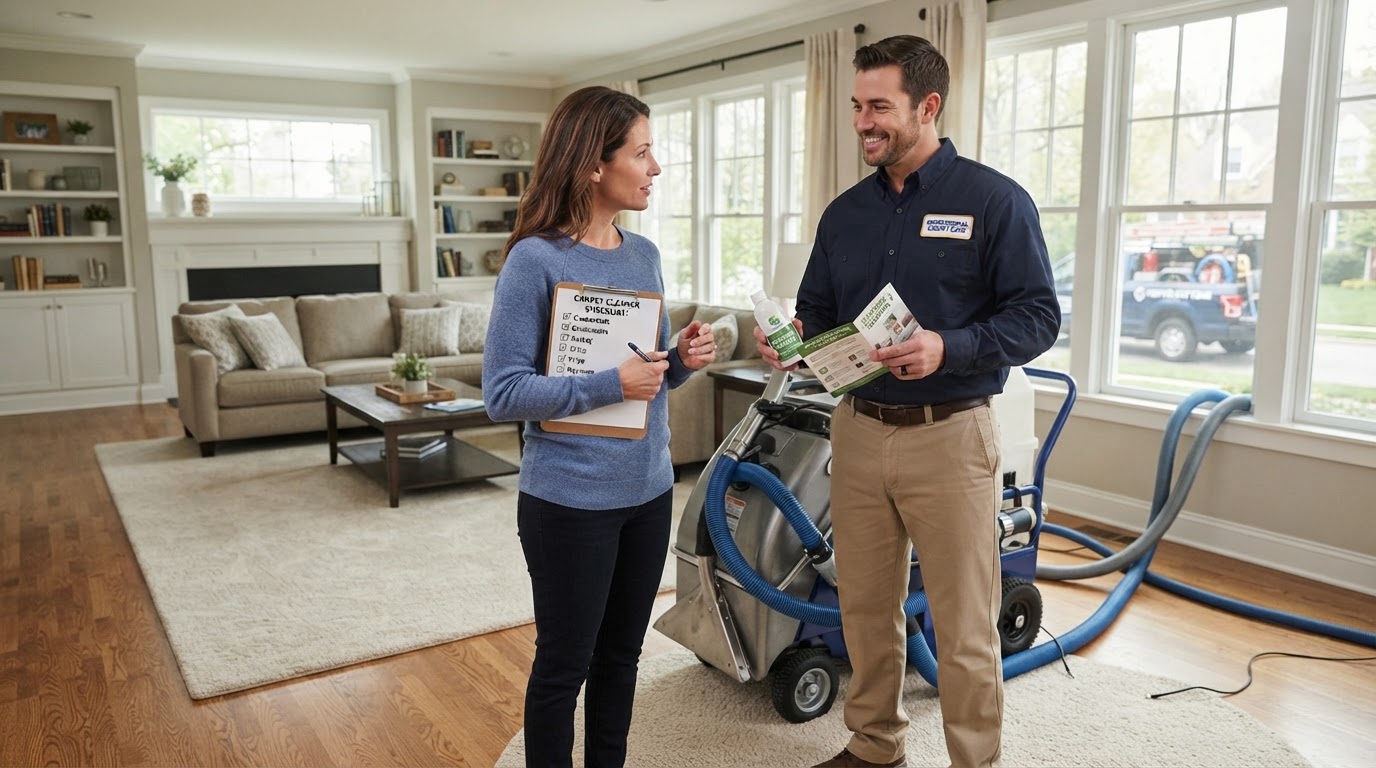
A carpet that looks clean from the doorway can still hold months of grit, pet odour and body oil in its backing. When a stain returns a week after a visit, or a room stays damp for two days, the problem is usually not bad luck. It is often a mismatch between the cleaning method, the fibre and the way the job was scoped and priced.
If you are comparing providers after searching for best carpet cleaning near me, the most useful step is to test what each company tells you before you pay. A reputable technician will explain the method, the drying time, the likely outcome for your specific stains and what is excluded from the quote. Those answers tell you more than any headline rating.
Local carpet cleaning is a service business with low barriers to entry. Anyone can buy a hot water extraction machine, but the quality of the result depends on pre-treatment, water temperature, dwell time, extraction passes and aftercare. The sections below set out how to assess method, credentials, reviews, pricing and safety so you can judge a provider on evidence rather than marketing.
Matching the Cleaning Method to the Carpet and the Problem
Most professional work falls into three broad methods, and each involves trade-offs in stain depth, drying time and disruption.
- Hot water extraction (HWE), often called steam cleaning, injects heated water and detergent into the pile, agitates it, then extracts the solution with a powerful vacuum. It is the most thorough option for deep soiling, traffic lanes and greasy residues. Water temperatures typically sit between 60 and 80°C at the wand, and drying usually takes between six and twelve hours depending on pile density, room humidity and airflow.
- Low-moisture compound cleaning uses a cleaning compound applied with a rotary or counter-rotating brush, followed by extraction with a truck-mounted or portable machine. Less water goes into the carpet, so drying is faster, often within one to two hours. It suits offices and hotels where downtime matters, but it is less effective on deeply embedded soil.
- Encapsulation uses a polymer-based detergent that crystallises dirt into particles, which are then removed by brushing and vacuuming. Dry-time is short and noise is low, which makes it suitable for low-pile synthetic carpets and commercial corridors. It is not a deep-extraction method and works best as regular maintenance.
A provider who explains why one method fits your carpet is giving a stronger signal than one who promises "the best" without detail. Ask what fibre the carpet is, what pile type it has and what the main problem is. Synthetic nylon handles hot extraction well. Wool needs lower temperatures and pH-neutral products. Polypropylene can be sensitive to some solvents.
Delicate fibres need a different approach altogether. Silk, viscose and curtains often require solvent-based or dry cleaning processes, plus careful handling to avoid water marking, shrinkage and colour bleeding. If a provider offers to steam-clean a silk rug or viscose runner without testing a hidden area first, treat that as a warning sign.
Reading Credentials and Reviews Beyond the Star Rating
Credentials matter only when they can be checked. In the UK, the most meaningful items are:
- Public liability insurance, usually with cover of at least £1 million, which protects your property if a technician causes damage.
- Employers’ liability insurance, a legal requirement where the company has employees, not just sole traders.
- Recognised accreditation or trade association membership, which usually involves inspection, technical standards and a complaints process. Ask for the membership number and check it on the scheme’s own site.
- Enhanced DBS checks for technicians who enter homes, schools or care settings. Ask whether the check is current and whether the company holds records for every technician who will attend.
Decorative badges are different. A logo on a website footer that links nowhere, or a "Best Rated" award with no named issuer, carries little weight. If an award is cited, ask who issued it, when and on what criteria.
For commercial work, facilities managers should request documents before instruction:
- A method statement describing the cleaning process, equipment, sequence and drying arrangements.
- A risk assessment covering slip hazards, electrical safety, chemical exposure and site access.
- COSHH data sheets for every cleaning product, which set out hazards, first aid measures and handling controls under the Control of Substances Hazardous to Health Regulations 2002.
These documents show whether the provider has thought about the site rather than simply turning up with a van.
Reviews are most useful when read for patterns rather than averages. Look for recurring mentions of:
- Stain follow-up: whether the company returned to treat stains that reappeared as the carpet dried.
- Punctuality and communication when delays occurred.
- Furniture handling: whether items were moved carefully, returned to their original positions and protected.
- Durability: whether results were still visible several weeks later, not just on the day.
Also check the reviewer’s location and the platform. Many providers use third-party review sites, and a cluster of reviews posted within a short period can distort an overall rating.
Finally, verify the "near me" element. A headline claim of local coverage does not establish that a provider serves your postcode. Enter your postcode into the booking form or ask directly which postcode districts the team regularly visits. A business based in one city may charge travel supplements or decline jobs in outlying villages.
Understanding Quotes, Pricing, and Timing Surcharges
Pricing in the UK usually follows one of two models. Per-room pricing is common for domestic work and gives a simple price per lounge, bedroom or hallway. Published rates from some providers sit around £45 to £55 per carpet, with larger through-lounges costing more and small bedrooms costing less. Per-square-metre pricing is more common for commercial and large properties, typically ranging from around £3 to £6 per square metre depending on method and access. Per-square-metre quotes are easier to compare across properties of different layouts, while per-room quotes are easier for households to budget.
Several variables move the final figure:
- Room size and shape, including stairs and fitted corners
- Stain treatment, particularly for pet urine, red wine or grease, which can require multiple passes
- Protector add-ons, such as stain guard, often quoted at around £15 per carpet
- The number of rooms in one visit, since multi-room bookings often reduce the per-room rate
Timing surcharges need attention. Out-of-hours, weekend and same-day work commonly carries a premium. One provider in the research sample applies a 15% surcharge for weekend or out-of-hours slots. Urgency can justify a premium when water damage has occurred, because delay allows mould and subfloor damage to develop. Paying extra to avoid a wait for a cosmetic stain is harder to justify.
Payment terms also vary. Domestic customers usually pay on completion by card or bank transfer. Larger commercial jobs may use invoicing with 30-day terms, which is normal for facilities contracts but should be confirmed in writing. Be cautious about deposits for work you have not yet seen, especially where the company has no verifiable trading address.
The lowest quote often omits pre-vacuuming, furniture moving or proper stain assessment. Pre-vacuuming matters because loose grit passes through the extraction machine and can scratch the pile or clog the tanks. A quote that excludes this step may look cheaper but produce a weaker result.
Questions to Ask Before Confirming
- What is included in the quoted price, and what is charged separately?
- Does the service include pre-vacuuming and moving furniture?
- Which cleaning method will be used, and why does it suit this carpet?
- What happens if a stain reappears after drying?
Written answers to these four questions usually reveal whether the provider has a process or simply a price.
Household Safety, Aftercare, and Whether It Is Worth the Cost
Drying time is the main factor in when children and pets can safely return to a room. Hot extraction carpets can remain damp at the base for several hours, and increased moisture slows evaporation. Windows open, a dehumidifier, air movers and a warm room shorten drying. Thick underlay, dense pile and high humidity lengthen it. Many technicians advise keeping people and pets off the carpet until it is fully dry to the touch and the pile has returned upright.
Allergen claims need careful reading. Regular professional cleaning can reduce the accumulation of dust, pollen and dust mite allergens in carpet, and extraction removes some of the reservoir that household vacuuming misses. However, evidence for specific health benefits, particularly for asthma or allergic rhinitis, is mixed, and no cleaning method eliminates dust mites entirely. Be wary of claims that a process "kills all germs" or "eliminates allergies". Ask which products are used, whether they are fragrance-free and whether they carry COSHH sheets.
Frequency depends on use. Households with pets, children or allergy sufferers often benefit from cleaning every six to twelve months. Lightly used bedrooms may need less. Over-cleaning can wear down backing and make carpets more prone to re-soiling. Many carpet manufacturers specify cleaning methods and intervals in their care guidance, and failure to follow them can affect warranty claims. Keep receipts and retain the provider’s method statement or product sheet in case of dispute.
Compare professional cleaning with hiring a machine or doing it yourself. Hire machines cost roughly £25 to £40 per day, but results depend heavily on user technique, and over-wetting is a common error. Domestic machines are suitable for light maintenance. Professional equipment, pre-treatment and inspection are usually worth the cost for heavy soiling or pale carpets.
Replacement can be more economical than cleaning when the carpet is worn through to the backing, heavily delaminated, badly stained by urine that has reached the underlay, or persistently smelling after treatment. A technician’s inspection can establish whether cleaning will add meaningful life.
Franchise brands such as Stanley Steemer and Chem-Dry are a neutral example of how branding and local delivery differ. Franchise identity can offer consistent systems, but the technician’s training, the method used and the local reputation of the operator usually determine the result. Ask the same credential and method questions regardless of brand.
Scoping Recurring and Commercial Cleaning
Offices, schools, care homes and rental properties differ in cleaning frequency, scheduling needs and disruption tolerance. Offices with heavy footfall may need quarterly low-moisture cleaning in circulation areas. Schools often prefer cleaning during holidays, while care homes require careful product selection and coordinated room moves. Rental properties usually need cleaning between tenancies, with clear sign-off standards for landlords and letting agents.
A recurring contract typically covers monthly, quarterly, six-monthly or annual schedules. Monthly visits suit high-traffic reception areas or food-service spaces. Quarterly cleaning fits most offices. Annual cleaning suits low-traffic storage rooms or infrequently used meeting spaces. Choose the interval by counting actual foot traffic, staining patterns and any allergy or hygiene requirements.
Communal areas and shared spaces are a common gap in quotes. Stairwells, lobbies, lift landings and corridors are often assumed to be included, then excluded at invoice. Define the areas in writing by name, floor and square metreage, and confirm whether pre-vacuuming, spot treatment and edge cleaning are covered. Shared spaces in blocks of flats also need agreement on access times and whether residents will be notified.
Out-of-hours scheduling needs clear expectations for downtime, access and staff communication. Agree who holds keys or fobs, how alarms will be handled, and what happens if the drying period overlaps with the next working day. Ask for a named site contact and an agreed process for reporting problems. For schools and care homes, confirm safeguarding arrangements and that all technicians have current DBS checks.
A careful scoping conversation at the start usually prevents the disputes that follow poorly defined jobs. Ask for a site visit or detailed questionnaire, a written scope, a method statement and a schedule. Providers who take these steps are showing you how they will run the job, and that is the clearest sign of whether they are worth booking.