
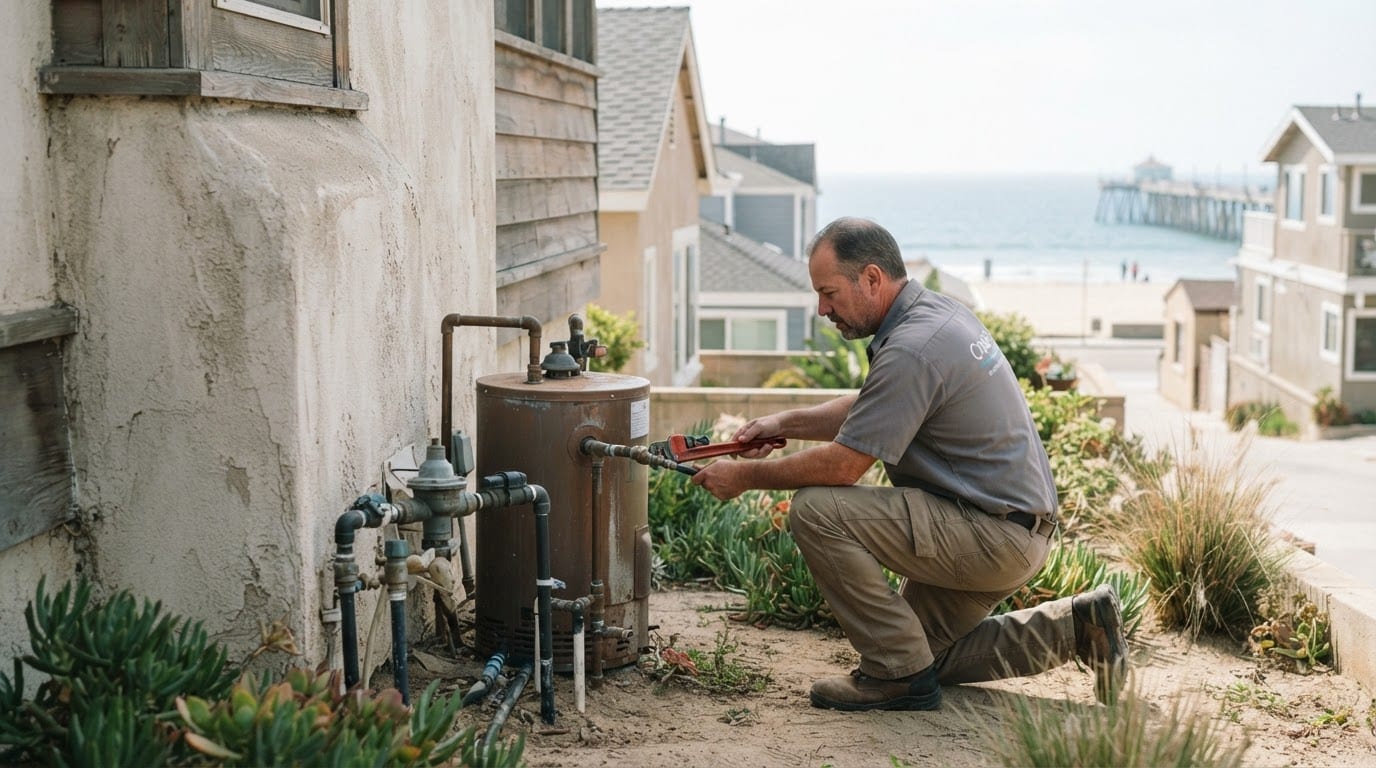
A water heater in a Huntington Beach garage can look fine from the outside while its gas connection and shutoff valves quietly corrode. Homes a few blocks from the sand often show wear sooner than similar houses inland, and the problems tend to surface at the fittings and fixtures homeowners rarely inspect. Understanding those local pressures is the first step toward catching small issues before they become expensive repairs.
Homeowners searching for a Huntington Beach plumber are usually dealing with one of three situations: a fixture that has stopped working, a sign of trouble in an older system, or a planned upgrade they want done correctly. Each calls for a different approach, and the right first call depends on how the problem presents. A slow drain in a 1960s ranch house raises different questions than a pressure drop in a townhome built in the last decade, even though both are on the same street grid.
Routine attention matters as much as emergency response. Plumbing By Tony and other licensed contractors in the area generally recommend that homeowners track changes over time, such as a water heater that needs more frequent relighting or a hose bib that drips only in the afternoon. Keeping a simple log of these observations gives a technician useful context when a visit is needed.
Why Coastal Air Changes the Plumbing Maintenance Picture
Salt-laden marine air accelerates corrosion on exposed metal. Chloride ions in the air settle on surfaces, hold moisture, and break down protective oxide layers. The effect is strongest on components that sit outdoors or in semi-enclosed spaces such as garages, side yards, and crawl spaces with ventilation openings facing the ocean.
Material choice makes a measurable difference. Galvanized steel fittings and older carbon steel shutoff valves corrode quickly in this environment, and their threads often seize or weep before the valve itself fails. Brass fittings resist corrosion better but can suffer dezincification, particularly where water chemistry is aggressive. Stainless steel braided supply lines, PEX tubing, and copper with proper protective coatings generally hold up well. Dielectric unions remain important wherever copper meets steel to limit galvanic corrosion.
Homeowners can perform simple visual checks between service visits:
- Look for white, green, or rust-colored crust on water heater connections, gas flex lines, and the base of shutoff valves.
- Test angle stops and main shutoff valves by turning them slightly once or twice a year to prevent seizing, and watch for drips at the stem.
- Inspect outdoor hose bibs for flaking paint, loose handles, and drips around the packing nut.
- Check the water heater’s sacrificial anode rod status during routine service, since it is a primary defense against tank corrosion.
Any visible leakage at a fitting should be addressed promptly, because a small weep can progress to a failed joint in a matter of months under salt exposure.
Older Homes, Aging Lines, and Hidden Sewer Problems
Many Huntington Beach neighborhoods contain housing built in the mid-twentieth century, when galvanized steel supply lines and cast iron or clay sewer laterals were standard. These materials have predictable failure patterns. Galvanized pipe develops interior scale that narrows the bore, reduces flow, and can release rust into the water. Cast iron drain lines crack and separate at joints, while clay laterals are vulnerable to root intrusion and offset joints.
Sewer laterals are the most overlooked component. Because the line runs underground between the home and the municipal connection, problems often appear first inside the house as slow drains affecting several fixtures at once. Tree roots exploit small joint gaps in clay pipe, and once roots take hold, they trap debris and produce recurring backups. A camera inspection, typically priced between $150 and $500 depending on access and length, can confirm the condition of the line before a repair is chosen. Hydro jetting, often $300 to $700, clears roots and buildup but does not repair structural damage.
Recognizing Early Warning Signs
Certain symptoms indicate a minor fix, while others point to a larger issue:
- Minor fix: A single slow sink that clears with a cleanout or drain snake.
- Larger concern: Slow drains in multiple fixtures, especially if the toilet gurgles when the tub drains.
- Supply line concern: Discolored or rusty water on the first draw in the morning, or a gradual loss of pressure across the house.
- Hidden leak: Water meter movement with no fixtures in use, or a bill that rises without explanation.
- Ground signs: Soft or consistently wet spots in the lawn, sinking pavement near the sewer cleanout, or sewage odor in the yard.
- Indoor signs: Persistent musty smells near floor drains or water stains on ceilings below bathrooms.
When two or more of these symptoms appear together, a licensed plumber should evaluate the system instead of treating each symptom separately.
Water Heaters, Pressure, and Earthquake Readiness
Huntington Beach sits near active fault systems, including the Newport-Inglewood zone, so seismic preparedness belongs in any discussion of water heaters. California requires water heaters to be anchored or strapped to resist movement, typically with two straps, one in the upper third and one in the lower third of the tank. Straps and the associated bolts are inexpensive, usually adding $100 to $250 to a service call, and they prevent tanks from falling and rupturing gas or water connections.
Closed plumbing systems, common where a check valve or pressure-reducing valve isolates the home from the municipal supply, require a thermal expansion tank. As water heats, it expands, and without an expansion tank the pressure relief valve may discharge repeatedly. A properly sized expansion tank typically costs $75 to $200 installed. A pressure regulator, usually set between 50 and 80 psi, protects fixtures, washing machine hoses, and appliance valves from excessive static pressure. Regulators are commonly priced between $200 and $500 installed.
Tank and tankless options involve trade-offs rather than a single best answer:
- Tank water heaters suit households with steady, high-volume demand and limited space for venting changes. Installed replacement often ranges from $1,200 to $3,000.
- Tankless units save floor space and can reduce standby losses, but they require adequate gas capacity, proper venting, and sometimes electrical upgrades. Installed costs commonly run from $2,500 to $5,000 or more.
- Usage pattern matters. Households with simultaneous showers and dishwashers may find tankless flow rates limiting, while small households with intermittent use may benefit from a tankless system.
Earthquake shutoff valves, which close automatically when sensors detect strong motion, are an optional safety consideration. They are not required in every installation, and their suitability depends on local code interpretation, the home’s gas and water configuration, and the valve’s certification. Discuss them with a licensed plumber before purchasing.
Outdoor Plumbing, Irrigation, and Backflow Protection
Outdoor plumbing is often where water waste and safety risks overlap. Irrigation systems in Orange County can account for a significant share of residential water use, and leaks in sprinkler lines or drip emitters can go unnoticed beneath mulch and turf. Drip irrigation connections should include pressure regulation and filtration, and emitters should be checked seasonally for clogging and displacement.
Backflow prevention devices protect the potable supply from contamination if pressure drops and water is drawn back from irrigation lines, hose connections, or other sources. Common assemblies include Double Check Valve Assemblies and Reduced Pressure Principle Backflow Assemblies. Under California regulations, these devices must be tested by a certified backflow tester, generally at installation and then annually, with results submitted to the water purveyor. Testing typically costs $75 to $150 per device. Homeowners can confirm whether a property has one by checking the water service line near the meter or the irrigation connection for a metal assembly with test cocks and shutoff valves, then reviewing prior service records or asking the city’s water division.
Hose bibs deserve similar attention. Installing a vacuum breaker on every hose connection prevents backflow from garden hoses and prevents contaminated water from entering the system. Hose bibs should be drained or protected during colder periods, and washers should be replaced when drips appear.
Planning Repairs, Permits, and Choosing Service Wisely
Good decisions during repairs begin with understanding urgency. Emergency calls involve active leaks, sewage backing into the home, gas odor, or a water heater failure that threatens property. For these, homeowners should know where the main water shutoff and gas shutoff are located before a problem occurs, and they should avoid operating electrical switches near a suspected gas leak. Scheduled repairs allow time to compare estimates, confirm scope, and plan permits.
Permits and Inspections
Work involving new supply lines, drain or vent modifications, water heater replacement, gas connections, and backflow installation generally requires a permit issued through the City of Huntington Beach Building and Safety Division. The California Plumbing Code, based on the Uniform Plumbing Code, governs most installations, and inspections verify the work before it is concealed. Permits create a documented record that can matter during resale, when buyers or lenders ask about past work, and during insurance claims, when adjusters may require evidence that repairs met code. Unpermitted work can complicate both situations. Verify current requirements with the city before scheduling, since local amendments and fee schedules change.
Questions to Ask Before Booking
Evaluating an estimate involves more than comparing bottom-line numbers. Consider the following:
- License verification: Confirm the contractor holds a valid C-36 Plumbing license through the Contractors State License Board and that the license is active and in good standing.
- Written scope of work: The estimate should list specific tasks, materials, and the expected outcome, not only a total price.
- Parts and labor breakdown: Clear line items show brand, model, or grade of major components and identify labor hours or flat rates.
- Permit responsibility: The estimate should state who pulls the permit and who schedules inspections.
- Warranty terms: Ask for written warranty coverage on both labor and equipment, including the duration and what voids it.
- Emergency rates and response time: Clarify after-hours surcharges and whether the company responds to urgent calls outside business hours.
Requesting references and checking insurance certificates for general liability and workers’ compensation coverage completes a sound evaluation. A careful choice at this stage protects both the household and the plumbing system for years to come.