
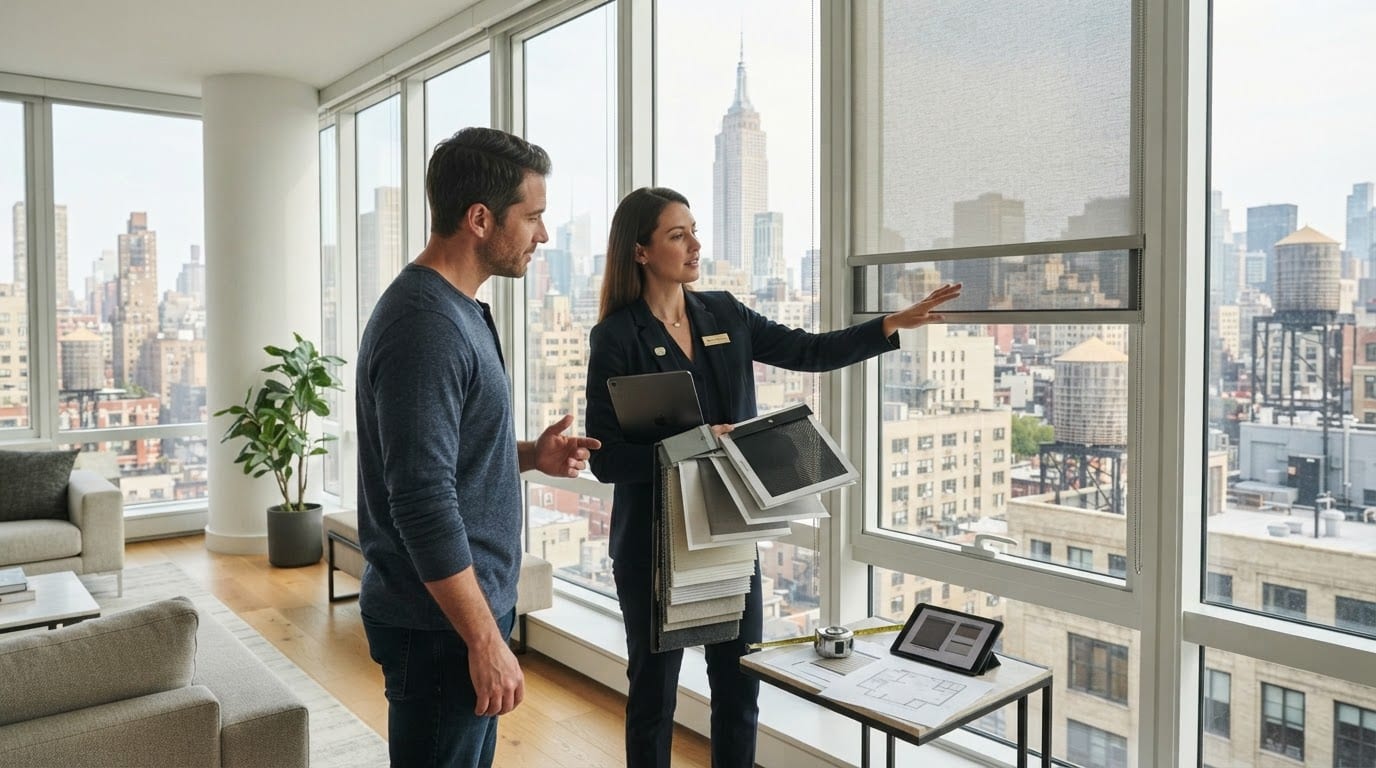
Few home upgrades change a New York apartment as quickly as a well-fitted window shade. A south-facing living room can turn into an oven by mid-afternoon in July, and a street-facing bedroom can lose its privacy the moment a neighbor’s light comes on across the courtyard. Yet shade purchases often go wrong for reasons that have little to do with fabric. The problems usually start with a mismeasured window, an unclear quote, or a mount that does not suit the frame.
When New York homeowners look for a Shades company New York, they are usually weighing several decisions at once: which style will handle the light, what the installation will really cost, and whether the building’s rules allow the hardware they want. Breaking those decisions into separate questions makes the process far more manageable.
Companies such as SUPREME SHADES & DRAPES WINDOW TREATMENT SERVICE COMPANY DESIGN & INSTALL offer design and installation under one contract, which can simplify coordination in a building with tight access. Whichever provider you consider, the same fundamentals apply, and understanding them before the first consultation will help you compare proposals on equal terms.
Matching Shade Styles to New York Apartments and Buildings
The right style starts with the window itself. Light exposure, window size, and privacy needs determine which fabric and operating system will perform well. A west-facing window with heavy afternoon glare needs a different solution than a north-facing bedroom that only needs blackout at night.
The most common options include:
- Roller shades: A single fabric panel wound around a roller tube. They offer clean lines and a wide range of openness factors, typically 1% to 10%. Lower openness blocks more glare and heat but reduces outward visibility.
- Cellular (honeycomb) shades: Pleated fabric cells that trap air and provide insulation. They are well suited to drafty pre-war windows and rooms where heating and cooling loads matter. Single-cell and double-cell constructions are the typical choices, with double-cell offering the higher R-value.
- Roman shades: Fabric that folds into horizontal pleats when raised. They suit traditional interiors and larger windows, though their cords and folds collect dust more readily.
- Solar shades: Woven or PVC-coated screens that reduce glare and UV exposure while preserving the view. They are useful on high-floor windows facing the sun but offer limited privacy at night unless paired with a second shade.
Building type matters as much as style. Pre-war buildings frequently have deep window reveals, plaster returns, and irregular frame dimensions, which can make inside mounts difficult or require a shallow headrail. Modern glass towers often feature floor-to-ceiling glazing, large single panes, and recessed channels that call for specialized brackets. Asking an installer to check reveal depth and frame plumb during the first visit prevents surprises later.
Motorized and Smart Shade Options
Manual shades use wand, chain, or cord operation. Tilt wands are common on blinds and some shades, while continuous-loop chains suit heavier fabrics. Cordless lift systems, which are now standard in many residential product lines, address child-safety concerns and meet current industry guidance from the Window Covering Manufacturers Association (WCMA) and the Consumer Product Safety Commission (CPSC).
Motorized systems use tubular motors housed within the roller tube, often in 35 mm or 45 mm diameters, and can be operated by remote, wall switch, or app. Many newer models support smart-home protocols such as Zigbee, Z-Wave, or Matter, which allow scheduling and integration with voice assistants.
Motorization is worth the added cost in specific situations:
- Windows above a kitchen counter, staircase, or radiator that are hard to reach safely
- Floor-to-ceiling installations where manual operation requires a pole or stepladder
- Rooms with multiple windows that need coordinated movement, such as a long living room
- Homes where occupants have limited mobility
Expect motorization to add a meaningful premium. Most installers quote it per window, and the cost reflects the motor, battery or power supply, and programming.
What Shade Pricing in New York Typically Depends On
Quotes for the same window can differ by hundreds of dollars, and the reasons usually lie in five cost drivers: material grade, fabric opacity, custom sizing, motorization, and hardware. Higher-grade fabrics with tighter weaves, multi-cell constructions, and premium brackets all raise the price.
As a general benchmark for mid-range residential work, buyers often see:
- Basic manual roller shades: roughly $75 to $200 per window
- Custom cellular shades: roughly $200 to $600 per window
- Solar or screen shades: roughly $100 to $350 per window
- Motorization add-on: roughly $300 to $900 per window, depending on the motor and control system
- Professional installation: commonly $50 to $150 per window, varying with building access and mount complexity
These figures are guidance rather than fixed rates. Prices shift with fabric supplier, window count, and whether the order includes multiple rooms.
Quotes also differ because providers structure their fees differently. Some charge a separate measurement fee, which may be waived if the order is placed. Others include installation in the product price. Minimum order thresholds can also affect small jobs, particularly for a single bedroom window.
To compare quotes fairly, ask each company to itemize the following for every window:
- Fabric name, collection, and openness factor
- Mount type and bracket style
- Operating system, including whether motorization includes a hub and programming
- Measurement, delivery, and installation charges
- Removal or disposal of old treatments
- Warranty length and what it covers
Once every proposal lists the same items, the differences become clear, and the cheapest option is not always the least expensive over the life of the shades.
How Measuring and Installation Work in NYC Buildings
The typical sequence runs through four stages: an initial consultation, an in-home measurement, the order, and installation. The consultation establishes goals, while the in-home measurement confirms dimensions that determine whether the product will fit.
Building logistics add complexity. Scheduling access is often the first hurdle, since doormen, building managers, and tenant notice requirements can extend the timeline. Freight elevators may be limited in hours, and narrow stairwells can restrict how large boxes are carried. Many co-op and condo boards require a certificate of insurance from contractors and advance approval for work in common areas, and some restrict exterior-visible hardware such as outside brackets or valances. Check the bylaws or proprietary lease before ordering.
Common measurement mistakes include:
- Measuring only once. Inside-mount widths should be taken at the top, middle, and bottom, and the narrowest figure used. Heights should be measured at the left, center, and right.
- Ignoring trim and sills. Architrave, casing, and protruding sills can block brackets or prevent a headrail from sitting flush.
- Forgetting clearance. Inside-mount shades typically need about 1/4 to 1/2 inch of width clearance so they operate without binding.
- Overlooking obstructions. Radiators, window cranks, and lock handles can interfere with fabric movement or cord placement.
Inside Mount Versus Outside Mount
An inside mount fits within the window opening, which produces a clean, built-in look and preserves trim lines. It requires adequate depth, usually at least 2.5 to 3 inches for most roller and cellular systems, and it can leave small light gaps at the sides. Those gaps are often acceptable in daytime but can be noticeable at night.
An outside mount installs on the wall or ceiling surrounding the opening. It is the better choice for shallow frames, irregular reveals, or windows where the shade must overlap the frame by 2 to 3 inches on each side to block light effectively. It also hides uneven frames and conceals hardware in buildings where an inside mount is not structurally possible.
For shallow or irregular frames, an outside mount with a valance or cassette headrail generally produces the most reliable result. For deep, square openings in good condition, inside mounts offer the cleaner finish.
Evaluating a New York Shade Company Before You Buy
Before committing, ask direct questions about the basics:
- Is there a showroom where you can see fabrics in natural light?
- Will someone visit the home for consultation and measurement, and is there a fee?
- Are physical samples available, and are they free or charged?
- What are current lead times for standard and custom orders?
- Does the company employ its own installers or subcontract the work?
- Are installers insured and familiar with masonry anchoring and plaster walls?
Warranties vary significantly. Look for clear coverage of fabric defects, mechanism failure, and motor performance, along with stated terms for labor. Read the return or remake policy carefully. Custom orders are often non-returnable, so the remedy for a fit problem is typically a remake, and the question becomes who pays for the remeasurement and reinstallation. Ask how the company handles a shade that arrives too wide or too deep for its bracket. A reputable provider will specify whether it covers the remake and who is responsible if the error came from the original measurements.
To verify reviews, read recent entries rather than only the highest-rated ones, and look for patterns in complaints about lead times, measurement accuracy, or post-installation service. Pay attention to how the company responds to criticism. Responsiveness during the quote process is often a reliable indicator of how it will handle a warranty claim.
Caring for Window Shades and Knowing When to Repair or Replace
Routine care depends on fabric and mechanism. Dust roller and solar shades with a soft brush attachment every few months. Spot-clean vinyl-coated and polyester fabrics with a damp cloth and mild detergent, testing first in an inconspicuous area. Avoid soaking cellular shades, which can distort cells and weaken the fabric. Roman shades can be vacuumed through a fabric-safe upholstery attachment at low suction.
For cordless and motorized systems, keep tracks and channels free of debris and avoid forcing the fabric past its travel limits. Check motor batteries or power connections periodically, and follow manufacturer guidance for resetting limits after a power interruption.
Common wear signs include:
- Sagging or uneven fabric, often caused by a worn spring or misaligned brackets
- Cord or chain failure, including fraying, stripping, or a loose lift that will not hold position
- Motor issues, such as intermittent operation, failure to reach limits, or error codes
- Light gaps that appear as the fabric ages and the headrail loosens
Deciding between repair and replacement depends on age, cost, and condition. A frayed cord or worn chain on an otherwise sound shade is usually a low-cost repair, often in the range of $30 to $100 depending on the mechanism. A failed tubular motor may cost less to replace than the labor required to diagnose it, particularly on older units with discontinued parts. Fabric that has faded, delaminated, or lost its insulating structure is generally better replaced entirely, since patching rarely restores performance.
As a practical rule, if repairs approach half the original price or the product is more than a decade old, a full reorder usually offers better value, especially if energy performance or smart-control features are a priority.