
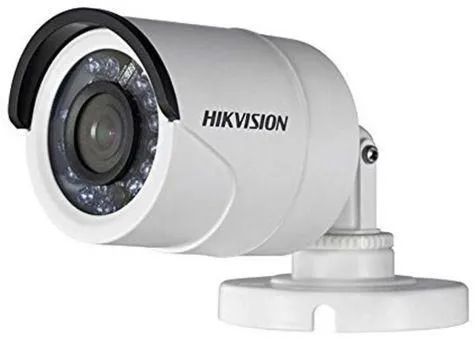
Property crime statistics reveal a troubling pattern. Break-ins peak during evening hours when darkness provides natural cover for intruders. Poor lighting creates blind spots that compromise security systems, leaving valuable assets and people at risk. Standard cameras struggle to capture usable footage after sunset, rendering surveillance nearly worthless when it matters most.
Understanding Advanced Low-Light Technology
- DarkFighter Sensor Innovation: Modern Hikvision CCTV systems incorporate sophisticated sensor technology that processes light differently from conventional cameras. The DarkFighter sensor amplifies available ambient light, producing colour images in conditions as low as 0.005 lux. This represents a significant leap from older systems that required street lamps or external lighting to function properly. The DS-2CD2085G1-I model demonstrates this capability with its 1/2.5″ progressive scan CMOS sensor that maintains image clarity even in challenging conditions.
- EXIR Infrared Illumination: Extended Infrared technology extends the camera’s night vision range up to 30 metres with uniform light distribution. Traditional infrared creates a spotlight effect with overexposed centres and dark edges. EXIR solves this by projecting infrared beams evenly across the surveillance area, eliminating hotspots and ensuring consistent image quality throughout the frame.
Comparing Budget and Premium Night Vision Performance
- Entry-Level Camera Limitations: Cheap surveillance systems typically feature basic infrared LEDs that illuminate only 10-15 metres. The resulting footage appears grainy with washed-out faces that make identification impossible. These cameras switch to black and white mode automatically, losing critical details like clothing colour or vehicle paint. Frame rates drop in low light, creating choppy video that misses crucial moments during fast-moving incidents.
- Advanced System Advantages: Premium cameras maintain higher resolution in darkness, capturing licence plates and facial features at greater distances. The colour night vision capability preserves important identifying characteristics that disappear in monochrome footage. Smart infrared reduces light pollution and power consumption by adjusting intensity based on subject distance, preventing the common problem of subjects appearing as featureless white silhouettes.
- Image Processing Differences: Superior processors analyse multiple frames simultaneously, reducing noise and enhancing contrast. This computational approach reveals details in shadows that budget cameras simply cannot reproduce. The difference becomes obvious when reviewing footage after an incident occurs.
Real-World Security Benefits
- Identification Accuracy: Clear night footage transforms security from passive recording to active crime prevention. Police departments report higher case closure rates when provided with sharp images showing distinguishing features. A face captured in colour provides exponentially more investigative value than a blurry grey shadow.
- Perimeter Protection: Enhanced night vision extends effective surveillance beyond building walls. Monitoring car parks, loading bays, and boundary fences becomes possible without expensive lighting infrastructure. Intruders lose their primary advantage when cameras see as well in darkness as daylight.
- Reduced False Alarms: Better image quality allows motion detection algorithms to distinguish between genuine threats and harmless triggers like animals or moving branches. This accuracy saves time and maintains staff alertness by eliminating alarm fatigue.
Maximising Night Vision Performance
- Strategic Camera Placement: Position cameras to avoid direct light sources that cause glare and lens flare. Street lamps, security lights, and vehicle headlights can blind sensors if pointed directly at them. Mount units under eaves or soffits where possible to protect lenses from weather that degrades performance over time.
- Regular Maintenance Requirements:
- Clean camera domes monthly to remove dust, spider webs, and water spots
- Check infrared LED functionality by viewing cameras at night
- Trim vegetation that blocks the camera’s field of view
- Inspect cable connections for moisture damage
- Update firmware to access improved processing algorithms
- Environmental Considerations: Coastal areas and industrial zones accelerate lens degradation through salt spray and airborne particles. Cameras in these locations need protective housings rated for harsh environments. Temperature extremes affect infrared performance, with some units requiring heaters in cold climates to maintain operational efficiency.
Night vision technology has evolved from a luxury feature to an essential security component. The gap between budget and professional systems continues to widen as sensor technology advances. Investing in quality low-light cameras protects assets when they’re most vulnerable and provides the evidence needed if incidents occur. A2Z Limited supplies the latest surveillance systems with advanced night vision capabilities tailored for Kenyan businesses and institutions. Contact our technical team to assess your property’s specific requirements and design a solution that maintains security 24 hours daily.
Featured Image Source: https://www.a2z.co.ke/wp-content/uploads/2024/05/HIKVISION-HD1080P-IR-Bullet-Camera-DS-2CE16D0T-IPF-2MP.webp