
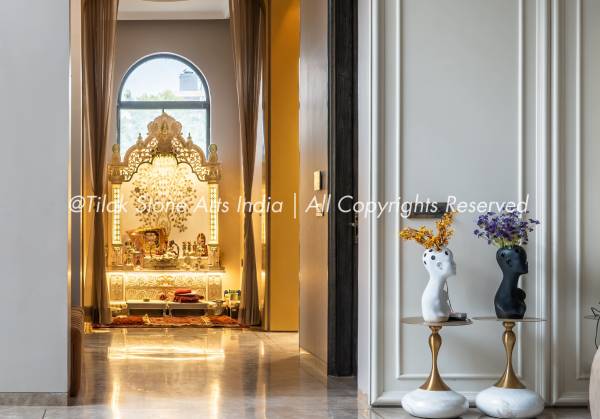
A home temple serves as more than just a designated prayer area—it represents the spiritual core of a household. When planning an interior home temple design, homeowners must consider spiritual requirements and the overall aesthetic cohesion with their living spaces.
The fundamental aspect of any interior home temple design involves proper placement and orientation. According to Vastu principles, the northeast (Ishanya) corner is considered auspicious, though the eastern or northern walls are acceptable alternatives.
Modern marble temple designs have gained popularity due to their timeless appeal and versatility in complementing various interior styles. When light dances with shadows, it brings out the beauty in every carving and creates a thoughtful mood. Many newer designs now use gentle lighting behind the gods and goddesses, adding a warm glow that makes the space feel special without being too bright or flashy.
Choosing materials means finding a sweet spot between honoring old ways and being practical for everyday life. While teak, rosewood, and other hardwoods represent traditional choices celebrated for their rich grains and cultural significance, stone options like marble, granite, and sandstone offer durability and timeless appeal. Metalwork—particularly brass, copper, silver, and gold plating—adds refinement through bells, lamps, and decorative elements. Contemporary temples might incorporate glass, mirrors, and composite materials to achieve a lighter aesthetic while maintaining structural integrity.
The surrounding décor establishes the context for the temple within the home’s broader design language. Floor treatments might include traditional patterns rendered in modern materials, while wall treatments could feature subtle textures or sacred symbols interpreted in contemporary ways. Fresh flowers, though traditional, can be arranged in sleek vases rather than conventional holders. Carefully selecting incense holders, plates, and bells allows these functional items to serve as design elements that bridge traditional requirements with modern aesthetics.
Colour schemes carry significant symbolic weight in temple design. Traditional colours—red symbolising power and energy, yellow representing knowledge and learning, white embodying purity and peace, and gold signifying prosperity—can be incorporated through thoughtful accent pieces rather than dominating the entire space. A neutral backdrop often allows deities and ritual items to stand out while maintaining visual harmony with surrounding areas.
The finishing details genuinely personalise the space. Family heirlooms displayed alongside contemporary artwork create a meaningful connection between generations. Traditional textiles reimagined as modern upholstery or framed art pieces add texture and cultural relevance. Even storage solutions for ritual items can be designed to complement the overall aesthetic while keeping necessary items accessible.
Conclusion
Creating a successful temple design ultimately requires understanding that sacredness comes not from rigid adherence to traditional forms but from the mindful intention behind the space. By honouring core spiritual principles, while embracing contemporary design approaches, homeowners can create temple spaces that remain relevant and integrated within modern homes. These sacred spaces serve as focal points for religious practices and as visual reminders of cultural heritage and spiritual values that continue to guide family life across generations.
Featured Image Source: https://drive.google.com/drive/folders/1TC4dv80YF9cCOQHDeo6TaNTuw1XW3_1E