
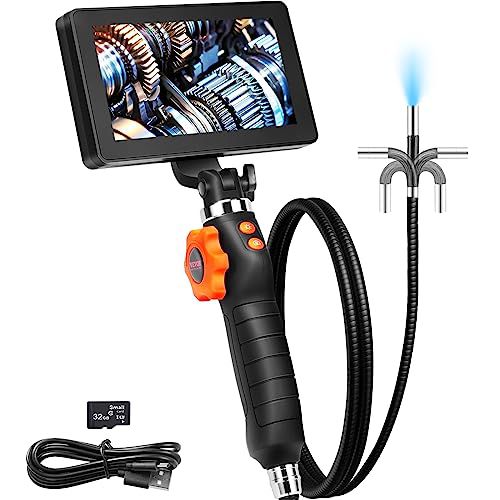
Every mechanic, plumber, and technician knows that sinking feeling. You’re dealing with equipment failure, and the problem is hidden deep inside where normal tools can’t reach. Flashlights don’t help. Mirrors get you nowhere. Taking everything apart means hours of work and potential damage to perfectly good components.
The articulating borescope inspection camera market exploded because of these exact frustrations. These devices promise to solve access problems that have plagued trades for decades. But the market is flooded with options that range from brilliant to completely useless.
Most buyers approach articulating borescope inspection camera selection backwards. They focus on price first, features second, and actual performance last. This approach leads to disappointment and wasted money.
What Actually Matters in Real Use
Articulation sounds straightforward until you start using these devices. Some models bend in four directions with smooth, precise control. Others jerk around like a broken puppet. The difference becomes obvious when you’re trying to navigate around obstacles or examine specific areas.
Camera resolution gets all the marketing attention, but it’s not the whole story. A high-megapixel camera with a cheap lens produces fuzzy images. Poor lighting ruins even the best sensors. The image processing chip determines how well the camera handles different lighting conditions and moving subjects.
Probe durability varies wildly between manufacturers. Some units survive years of heavy use. Others break after a few months of normal operation. The construction materials and assembly quality make this difference, but these details rarely appear in product descriptions.
Technical Specifications That Create Problems
Articulation Angles and Speed
Full 360-degree rotation sounds impressive in advertisements. In practice, many users find 180-degree articulation in four directions handles most situations. The control speed matters more than maximum range. Slow, jerky movement makes precise positioning difficult. Overly sensitive controls cause frustration and wasted time.
Probe Design Compromises
Thicker probes carry better cameras and stronger articulation mechanisms. Thinner probes access tighter spaces but sacrifice durability and image quality. Most professionals end up needing both sizes for different applications, which doubles the equipment cost.
Power and Battery Life
Battery life specifications look good on paper until you factor in real-world usage patterns. Constant articulation, bright LED lighting, and video recording drain batteries quickly. Replaceable batteries cost more upfront but save money long-term. Built-in batteries create disposal problems when they eventually fail.
Where People Go Wrong
Focusing on Features Instead of Applications
Buyers get excited about Wi-Fi connectivity, smartphone apps, and cloud storage. These features add complexity and potential failure points. Simple, reliable designs often outperform feature-rich alternatives in demanding environments.
The recording and documentation features sound essential until you realize most inspections need immediate visual feedback, not permanent records. Video files consume storage space quickly. Still images work fine for most documentation needs.
Ignoring Operating Conditions
Waterproof ratings become critical in wet environments, but many users forget about chemical resistance. Oil, coolants, and cleaning solvents damage seals and lenses over time. Temperature extremes affect battery performance and screen visibility.
Dusty environments clog articulation joints. Vibration damages internal components. These factors rarely influence purchasing decisions but determine long-term reliability.
Making Sense of the Options
Start with your worst-case inspection scenario. What’s the tightest space you need to access? What lighting conditions will you encounter? How long do your typical inspections take?
Budget models might handle occasional use, but they struggle with demanding applications. Professional-grade units cost more but survive harsh treatment and frequent use. The price difference often pays for itself through reduced downtime and replacement costs.
Warranty terms reveal manufacturer confidence. Companies that offer comprehensive coverage and fast repair services believe in their products. Extended warranties from third parties suggest the manufacturer expects problems.
Testing Reality vs Marketing Claims
Demonstration units or return policies let you verify performance claims. Marketing materials focus on best-case scenarios. Real-world testing reveals how equipment performs under pressure.
Image quality looks different on various display devices. What appears sharp on a small built-in screen might show problems on a larger monitor. Color accuracy matters for identifying corrosion, wear patterns, and other visual clues.
The articulation mechanism either works smoothly or it doesn’t. This becomes obvious within minutes of hands-on testing. Control responsiveness, joint stiffness, and movement precision vary significantly between models.
The Bottom Line Decision
Equipment reliability determines whether these tools help or hinder your work. A broken borescope creates more problems than having no borescope at all. Downtime costs money. Unreliable equipment damages professional reputation.
The inspection challenges in your field aren’t getting easier. Components become more complex and access becomes more restricted as designs evolve. Having the right visual inspection tools becomes more critical each year.
Choose based on your specific needs rather than impressive feature lists. Simple, reliable designs often serve better than complex alternatives. The best articulating borescope inspection camera is the one that works consistently when you need it most.
Featured Image Source: https://m.media-amazon.com/images/I/51ZLpbO9hzL.SL500.jpg